This is the rate at which cycles are being burned by the network.
Cycles are the digital fuel that powers computation on the network, and they disappear when consumed. When a user buys using a credit card, the payment provider purchases ICP tokens behind the scenes, converts them into cycles, and then charges up the user's hosted software or cloud engines.
1 trillion cycles is worth 1 XDR (known as a Special Drawing Right/SDR), a currency defined by the IMF. 1 XDR is worth about $1.44 USD.
dashboard.internetcomputer.orgThe network market cap is the number of ICP tokens multiplied by their price.
Network users convert ICP tokens into cycles that are burned and disappear (deflation), and they are generated by the network to remunerate node providers operating nodes, and by some participants in network governance (inflation).
ICP tokens exist within the network, and enable it to create a self-sustaining network economy without central points of failure.
The New Tech Stack
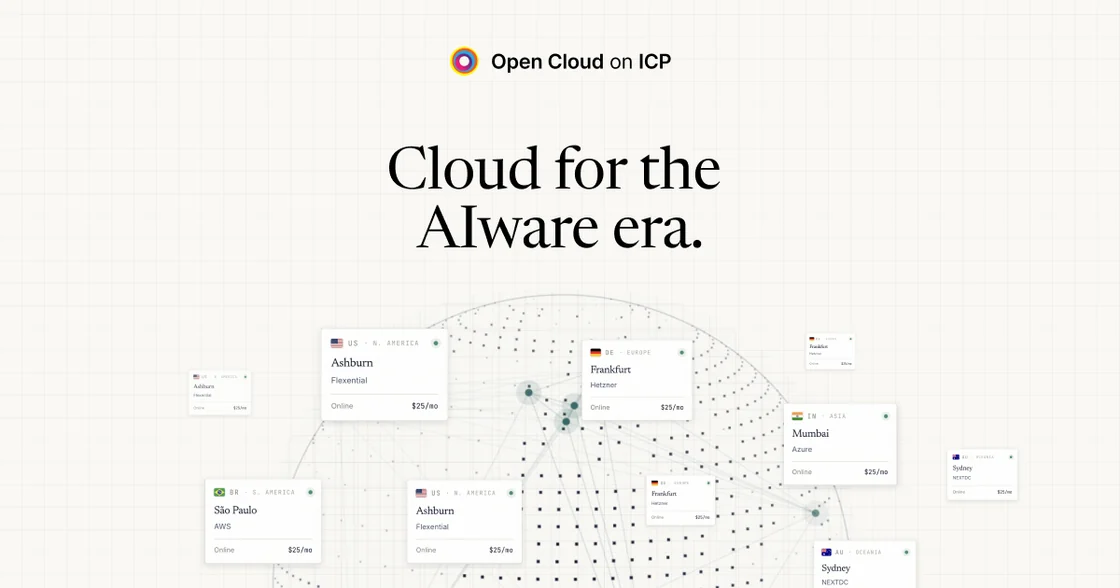
Sovereign serverless cloud, for AIware apps that empower agentic nations, enterprises, and people
The Internet Computer is a revolutionary serverless cloud for AIware apps, created by a mathematical, open network. It combines independently-operated hardware, including hyperscaler hardware, to form a universal tech stack that offers an alternative to traditional tech stacks. Tamperproof apps are immune to infrastructure attacks, always-on, can be auto-scaled, need minimal administration, and are digital assets onchain natives. It’s the ultimate platform for agents that build.
Get your cloud engine for agents and AIware
OpenCloud.orgUpgrade your agents into ICP wizards
Skills.internetcomputer.orgInternet Computer cloud has properties that enable agents to build online with greater autonomy.
Tamperproof
Serverless software is hosted within mathematical protocols that create the cloud, not directly on servers, and is tamperproof by default, just like the network. A misconfiguration cannot lead to a cyber breach. Immunity from infrastructure hacks allows AI to deploy without oversight from human security teams.
Fault-tolerant
The network cloud replicates the computations and data of serverless software across compute nodes, and the protocol is fault-tolerant. Serverless software does not depend on platform software, such as databases, so AI can build without oversight from human systems administration teams.
Sovereign
Your cloud is a compute configuration, not a machine. Run on the shared public network, or define a cloud engine — your own subnet — choosing compute providers and locations. Add and remove nodes to move over hardware and auto-scale software without interrupting hosted apps. AI choices don't add lock-in.
Agents build and update sophisticated AIware for you, while only needing to focus on the abstract logic of your apps and services.
AIware comes for free
AI builds using a new kind of software, and new languages. It focuses only on the UX and abstract backend logic of apps. The program is the database, because data lives in persistent memory, and is defined by program logic. AI can see this memory, and dynamically add logic, so AI chat can offer fluid extra functionality.
Lossy updates can't happen
Upgrading production apps has always been risky, so how can AI be trusted? Program data lives in memory and is defined by program logic. AI must specify how to transform that data on updates. Mistakes that could lead to loss are detectable, and lossy updates are rejected, reducing potential disasters to AI coding retries.
Digital assets, trustlessly
Increasingly, online commerce relies on digital assets, including stablecoins. Custodying any kind of digital asset securely is hard, but AI is provided with multi-blockchain APIs, and tamperproof key custody and signing, safe even against the physical breach of an underlying compute node. Digital assets are simplified to abstractions.
The world's most sophisticated network science, made yours.
The Internet Computer was developed by a multi-year R&D program. After initial work, the DFINITY Foundation was formed in October 2016, and has run one of the largest independent research operations in frontier computing since late 2017.
Its purpose is to develop internet-scale cloud that hosts a new kind of software — any language that compiles to WebAssembly, plus the domain-specific Motoko language developed in-house. Over the years, the network has benefited from the work of some of the world's leading researchers and engineers in secure distributed protocols, cryptography, execution environments, Wasm, and programming languages.
In recent times, an increasing emphasis has been placed on enabling the self-writing internet, where AI generates apps on demand. As the Internet Computer hosts ever more apps and services, it becomes increasingly clear that its time has come.
Papers, decks, and specifications from the program.
Every long document on this site is also available in Markdown and JSON so coding agents can ingest it directly.
Recent coverage, announcements, and field notes.
Mass-market platforms already live on the Internet Computer.

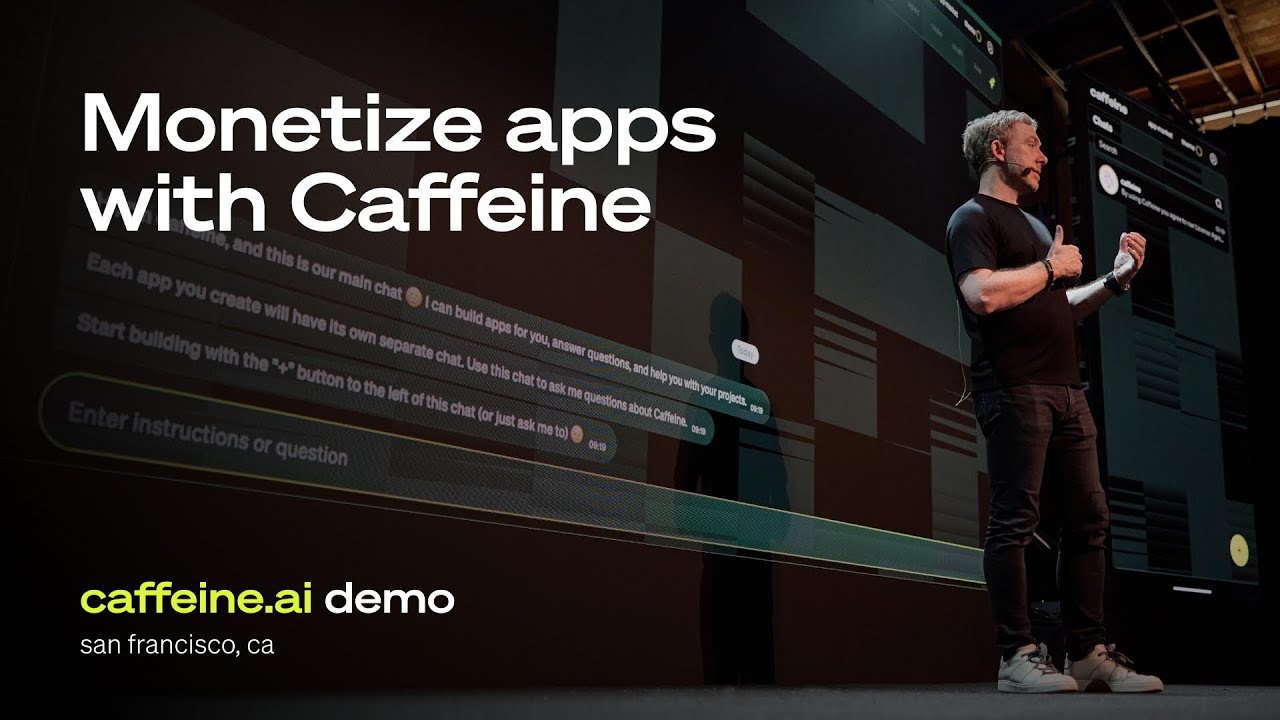
Caffeine — Build through conversation
Create custom websites, apps, and digital services simply by describing them in natural language. Caffeine demonstrates the self-writing internet, where AI generates fully functional applications on demand.

OISY: your digital wealth, private and tamperproof
One wallet for crypto, stablecoins, tokenized stocks, and collectibles across eight networks, opened in a browser tab.

OpenChat — Messaging with no backend operator
A real-time messaging platform comparable to WhatsApp, running entirely inside the Internet Computer. Users own their data and conversations.
Institutions building on the sovereign-by-default stack.

PDA — Sovereign infrastructure for Pakistan
The Pakistan Digital Authority and DFINITY partner to advance sovereign, AI-native digital infrastructure in Pakistan.

UNDP — Universal Trusted Credentials
The United Nations Development Programme uses ICP to issue tamperproof, verifiable credentials.

GZA — Europe's tech powerhouse
How the Internet Computer plays a leading role in the Greater Zurich Area's technology ecosystem.